
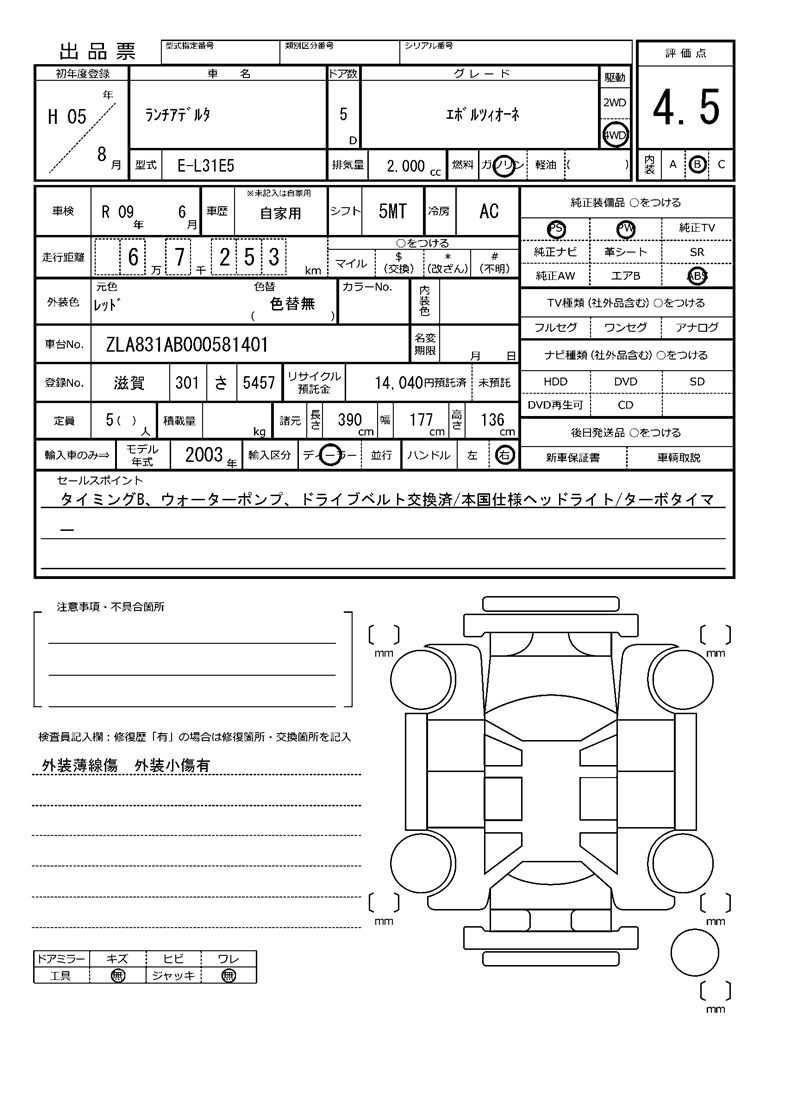
When you’re browsing for your next car from Japan, it’s easy to get distracted by shiny paint and high-resolution photos. We all do it. But in the world of professional importing, there is a golden rule: Trust the sheet, not the camera.
The Auction Sheet is a legal document produced by independent, professional inspectors. While a photo can hide a dent in a shadow or mask a mechanical rattle, the auction sheet is a “medical report” for the vehicle.
The “X-Ray” Vision: Why Images Aren’t Enough
Photos are a great starting point, but they are limited. They don’t tell you if the engine has a “knock,” if the underside is rusted from salt, or if the car was involved in a major accident but repaired to look “new.”
The auction sheet provides:
- Mechanical Transparency: Notes on engine health and transmission.
- Structural History: Clear indicators of replaced panels or frame repairs.
- A Precise Map: Every tiny scratch or pin-dent is recorded, even if it’s invisible in a photo.
Decoding the Grades: At a Glance
Every car is given an overall grade. This is your first filter when searching for quality.
Exterior Grading
- Grade 5 / S: Brand new or collector quality.
- Grade 4.5: Exceptional. Very high-standard used car.
- Grade 4: The “Sweet Spot.” A clean car with minor, expected wear.
- Grade 3.5: Honest condition. Will need a bit of TLC or a good polish.
- Grade R / RA: “Repair History.” These cars have had accident damage. While often cheaper, they require expert evaluation of the repair quality.
Interior Grading
- A: Like new.
- B: Very clean, typical for a well-maintained car.
- C: Expect some stains, wear on the seats, or a “smoker” smell.
Reading the “Car Map”
On the side of every auction sheet, you’ll see a diagram of the car covered in letters and numbers. This is a map of the bodywork. Here is your cheat sheet to the most common codes:
- A (Scratch): A1 is a light scratch; A3 is deep.
- U (Dent): U1 is a tiny dimple; U3 is a significant dent.
- W (Paint/Wave): This means the panel has been repainted. W1 is a professional job; W3 means the repair is visible to the naked eye.
- S (Rust) / C (Corrosion): S means surface rust; C means the metal is beginning to rot. Always check for these.
- XX: This panel has been replaced entirely.
How Much Should You Pay?
Understanding the sheet is the first step; knowing the market is the second. Based on our market estimates and sales statistics from the last 3 months, we provide a suggested auction price for every listing.
Market Estimate Insight: > Our suggested auction prices are calculated using real-time data from the most recent 90 days of Japanese auction results.
Note: Suggested prices refer to the auction hammer price only and do not include shipping, import duties, or registration costs. We are happy to provide a full “on-the-road” quote upon request.
A great set of photos gets you excited, but a great auction sheet gives you peace of mind. By learning these codes, you aren’t just buying a car; you’re making a calculated, safe investment.
Ready to start your search?