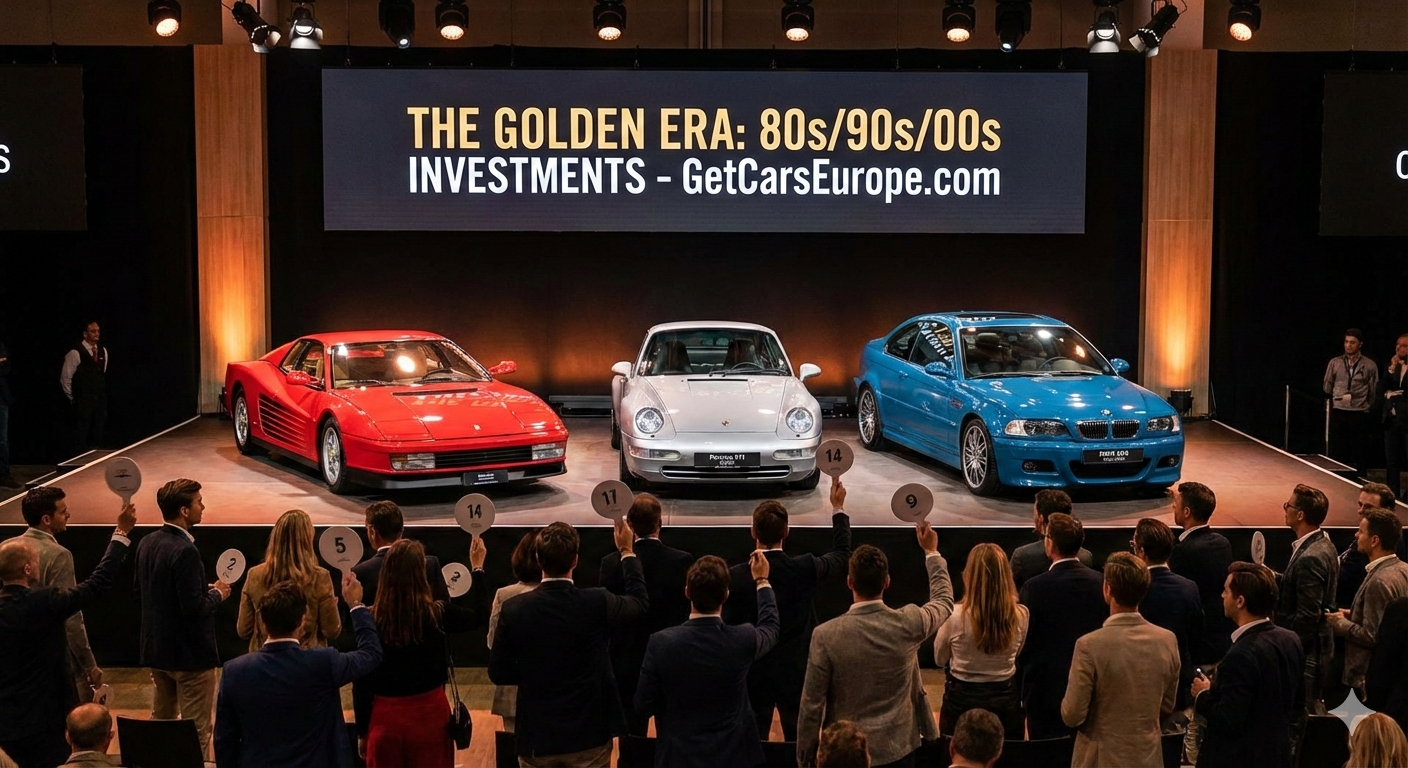
For decades, the classic car market was defined by the 1960s. However, as we move through 2026, a seismic shift has occurred. The “Youngtimer” era—spanning from the neon-soaked 80s to the refined performance of the early 2000s—has officially transitioned from “used cars” to blue-chip investment assets.
At GetCarsEurope.com, we are seeing record-breaking engagement in this segment. Here is an in-depth look at the three pillars driving this market explosion.
1. The Generational Wealth Transfer
The primary driver of any collectible market is the purchasing power of its enthusiasts. We are currently witnessing a massive demographic shift:
- The Nostalgia Cycle: Gen X and Millennials have reached their peak earning years. The cars that sat on their bedroom posters—the BMW E30, the Porsche 996, or the legendary Japanese icons—are no longer just memories; they are now attainable goals.
- A Shift in Taste: Unlike previous generations, today’s collectors value “driver-centric” experiences over chrome and carburetors. This demand is global, meaning a well-maintained European spec car has a massive audience in the US, Asia, and beyond, ensuring high liquidity for your investment.
2. The “Analog Peak” of Engineering
This era represents a unique “sweet spot” in automotive history that will never be repeated.
- The End of Pure Mechanicals: By the 90s, manufacturers had perfected internal combustion, fuel injection, and rust prevention, but hadn’t yet moved to the overly complex, screen-heavy, and software-locked systems of today.
- Tactile Connection: These cars offer what modern EVs and hybridized supercars lack: tactile feedback. The mechanical click of a gated shifter, the hydraulic weight of the steering, and the raw sound of a naturally aspirated engine offer a sensory experience that is becoming increasingly rare—and therefore, increasingly valuable.
3. Unrivaled Daily Usability
Perhaps the most pragmatic reason to invest in this era is that these cars actually work. Investing in a 1950s classic often means dealing with temperamental engines and a lack of safety. However, a car from 1995 to 2005 typically features:
- Reliable Climate Control: You can enjoy your investment in the peak of summer.
- Modern Safety & Braking: ABS and airbags provide peace of mind in modern traffic.
- Highway Capability: These vehicles were designed for the Autobahn. They can cruise at 130 km/h effortlessly, making them “lifestyle investments” you can actually enjoy on a weekend trip, rather than keeping them hidden in a climate-controlled bubble.
Market Analysis: Current Performance
The European market has shown incredible resilience in the “Modern Classic” sector over the last quarter. We are seeing a particular “flight to quality,” where low-mileage, original examples are seeing double-digit appreciation.
| Segment | Featured Models | 3-Month Trend |
| The Icons | BMW M-Division (E36/E46), Porsche 911 (993/996) | Strong Growth |
| The Rising Stars | Mercedes SL (R129), Audi RS4 (B5), VW Golf GTI (Mk2) | Steady Appreciation |
| JDM Legends | Nissan Skyline GTR, Toyota Supra (A80) | High Volatility/Peak Prices |
2026 Investment Outlook & Pricing
If you are looking to acquire a high-quality (Grade 4 or higher) European modern classic today, the entry point for “investment grade” vehicles has stabilized.
Suggested Auction Price: €14,000 – €68,000
(Based on average sales statistics from October 2025 – January 2026)
Disclaimer: This price reflects the estimated auction hammer price based on recent market data. It does not include shipping, import duties, or local registration costs. Personalized quotes for logistics and door-to-door delivery are available upon request.
Secure Your Asset with GetCarsEurope
The transition to electrification is making the internal combustion “Analog Era” more precious by the day. What was a hobby five years ago is now a sophisticated financial strategy.